
A Message from the President
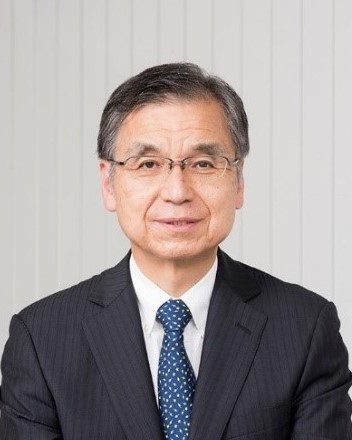
Ikuya YAMAMOTO
The President of KITA
2025 was yet another year colored by the gloomy mood that has endured since the COVID-19 pandemic. I think many of us feel apprehensive about the unending conflicts taking place overseas during the past few years. Many people have been affected by natural disasters such as COVID-19 and the frequent earthquakes and torrential rains in Japan. Such disasters can be seen as beyond human understanding and unavoidable, however it is very clear that the conflicts overseas are man-made calamities whose flames are being fanned by heads of state, and therefore hard to resolve.
KITA’s main work is to welcome participants who come all the way to Japan from many different countries, and we are affected to a greater or lesser extent by such overseas conflicts. We may wish there was more that could be done when we think about how participants from war-torn countries and regions such as Ukraine and Palestine must feel. As war zones expand, the flight routes for their travels have to be changed and they face more risks. It is however reassuring that recent improvements in AI mean that it is now possible to instantly access optimal solutions for safe travel routes.
Speaking of which, there were a number of booms in AI during my corporate career, and I even considered utilizing it on the factory floor, but unfortunately the practical hurdles were too high. It seems to be rather different this time though. Even an AI search engine I’m quite familiar with (?) can provide around a page of detailed answers in response to a roughly 20-word question. Amazing progress is also being made in machine translation. Apparently, Google Translate can handle prose in more than 240 languages. It is widely used at KITA as our work deals with other countries and as such frequently requires foreign language translation. The AI function we are most interested in at the moment is simultaneous interpretation. We mainly use English in KITA training courses, but not all participants are proficient in English, so they might return to their homelands with better results from their training if we can make skillful use of simultaneous interpretation functions in our courses. I also have a dream that this function might offer an opportunity to help Japan, which is greatly handicapped by the fact that Japanese only has about 100 million native speakers.
Various restrictions on AI are being discussed due to fears aroused by the tremendous speed with which it is evolving. It is certainly true that there is only a fine line between a poison and a beneficial drug. I hope that AI itself will develop AI technologies which will prevent people from fighting one another in the future, because people today seem to be too preoccupied with selfish desires to do that!